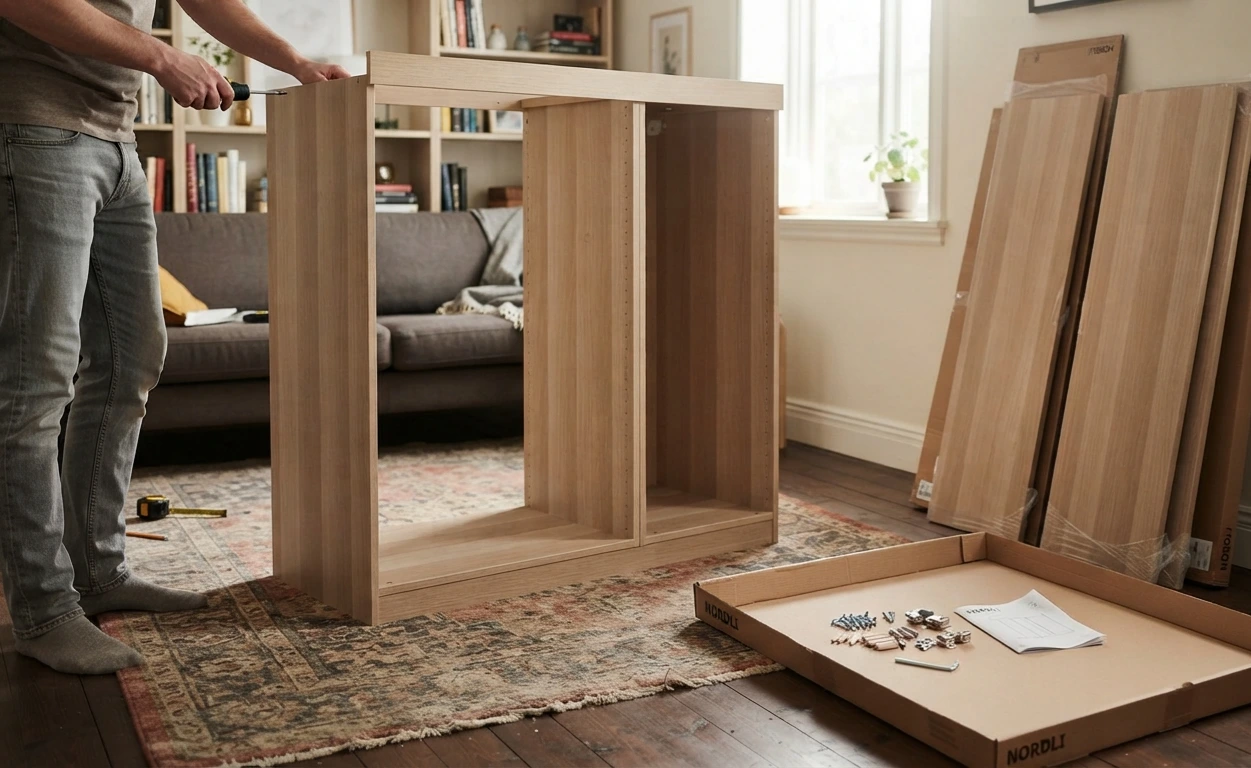
You order a new wardrobe or desk online, and a few days later, a compact cardboard box arrives at your door. Instead of a fully assembled piece of furniture, you find neatly packed panels, hardware, and step-by-step instructions. This is how flat-pack furniture works.
Flat-pack furniture is designed to be transported in separate pieces and assembled after delivery. This approach makes furniture easier to ship, carry through narrow doorways, move upstairs, and store before assembly. Once built, it provides the same basic function as comparable furniture while taking up far less space during shipping and transport.
So why has flat-pack furniture become such a popular option? This article explains what flat-pack furniture is, why buyers and retailers prefer it, how it differs from fully assembled furniture, and whether you should assemble it yourself or hire a professional.
What Is Flat-Pack Furniture?
Flat-pack furniture is designed to ship unassembled in compact, flat boxes. The buyer receives separate panels, hardware, and assembly instructions, then puts the furniture together at home.
The idea of shipping furniture in separate parts has existed for well over a century. Furniture manufacturers have long looked for ways to reduce shipping space and make products easier to transport. Modern flat-pack furniture became widely recognized through IKEA, which helped popularize furniture designed around efficient packaging, customer assembly, and affordable pricing.
Today, manufacturers continue to improve flat-pack designs with stronger hardware, clearer instructions, lighter materials, and more efficient packaging. Flat-pack furniture is now available in many forms, including beds, desks, wardrobes, shelving units, cabinets, storage systems, and dining furniture.
6 Reasons Flat-Pack Furniture Has Become So Popular
Flat-pack furniture has become a major part of the modern furniture market because it solves practical challenges related to shipping, storage, delivery, and affordability. It also gives buyers access to a wide range of furniture that can be transported more easily and assembled when needed.
Here are six reasons flat-pack furniture remains popular:
Lower Prices
Flat-pack packaging can reduce transportation and storage costs because unassembled panels can be stacked more efficiently than fully built furniture. Manufacturers can often fit more units into shipping containers and delivery vehicles, while retailers may need less warehouse space to store inventory.
Flat-pack furniture also reduces or eliminates factory assembly work, which can help lower production costs. These savings may contribute to a more affordable price, although the final cost still depends on the materials, design, brand, and construction quality.
Easier Transportation and Moving
Large, fully assembled furniture can be difficult to carry through narrow hallways, stairwells, elevators, and apartment doorways. Flat-pack boxes are usually easier to handle because the furniture is divided into smaller components.
This can be especially useful for apartment residents, people moving into upper-floor units, and homeowners with limited access points. The furniture can be carried inside before assembly, reducing the risk of getting a large, fully built piece stuck at a doorway or stair turn.
More Efficient Storage
Flat-pack boxes can be stacked and stored more efficiently than fully assembled furniture. Retailers can keep more units in a warehouse or stockroom, while customers can store unopened boxes until they are ready to assemble them.
This can also be useful during a move or renovation. Instead of setting up every piece immediately, buyers can keep boxed furniture in a spare room, garage, or storage area until the space is ready.
Modular and Configurable Options
Some flat-pack furniture systems use standardized components that allow buyers to create different layouts. Modular wardrobes, shelving systems, cabinets, and storage units may be available in multiple widths, heights, or configurations.
These options can help buyers choose furniture that fits their available space and storage needs. However, customization varies by product. Not every flat-pack item is modular or designed to be expanded.
A Wide Variety of Styles and Designs
Flat-pack furniture is available in many styles, from simple and modern designs to traditional, industrial, and contemporary options. Manufacturers can often introduce new finishes, colors, sizes, and product variations without changing the basic packaging and shipping process.
This gives buyers a broad selection of furniture at different price points. Whether you need a compact desk, a large wardrobe, or a complete storage system, flat-pack furniture is available in designs suited to many homes and interior styles.
Convenient Options for Small Homes
Many flat-pack furniture brands offer products designed for apartments, studios, dorm rooms, and other compact spaces. These may include narrow shelving units, compact desks, storage beds, wall-mounted furniture, and modular storage systems.
These space-saving features are not exclusive to flat-pack furniture. However, flat-pack brands often focus on flexible and compact designs that work well in smaller homes.
Flat-Pack Furniture vs. Fully Assembled Furniture: What Is the Real Difference?
Flat-pack and fully assembled furniture can serve the same purpose, but they differ in how they are packaged, delivered, and assembled.
Flat-pack furniture arrives in separate parts and requires assembly after delivery. Fully assembled furniture is built at the factory and delivered ready to use or with minimal setup required.
Neither option is automatically better. The right choice depends on your budget, available space, preferred materials, moving needs, and how much time you want to spend on assembly.
| Factor | Flat-Pack Furniture | Fully Assembled Furniture |
|---|---|---|
| Delivery | Ships in separate panels and components | Usually delivered already assembled |
| Assembly | Typically assembled after delivery | Usually completed at the factory |
| Price | Often more affordable, depending on the materials and design | May cost more because of factory assembly and larger shipping requirements |
| Materials | Varies by brand and may include particleboard, MDF, plywood, metal, or solid wood components | May include solid wood, engineered wood, metal, or mixed materials |
| Moving | Usually easier to transport before assembly | May require more space to carry and move |
| Durability | Depends on the materials, hardware, construction, and quality of assembly | Depends on the materials and overall construction quality |
| Storage | Compact boxes are generally easier to stack and store | Finished furniture requires more storage space |
What to Consider Before Buying Flat-Pack Furniture
Not all flat-pack furniture is made to the same standard. Materials, panel thickness, hardware, finishes, and weight capacity can vary significantly between products.
Reviewing these details before buying can help you choose furniture that fits your needs and holds up under regular use.
- Panel material and thickness: Check the type of material used and consider how the furniture will be used. Thicker or more rigid panels may provide better support, but shelf strength also depends on the span, support points, and weight placed on the furniture.
- Hardware quality: Look at the type and quality of the included hardware. Cam locks, dowels, screws, brackets, and other fittings should be appropriate for the furniture’s size and intended use. Correct installation is also important for long-term stability.
- Weight capacity: Review the manufacturer’s recommended weight limits for shelves, drawers, hanging rods, desks, and other load-bearing components.
- Assembly requirements: Check the number of assembly steps, the estimated assembly time, and whether additional tools are required. Some furniture can be assembled with basic hand tools, while larger or more complex pieces may require multiple tools or two people.
- Return policy: Review the retailer’s policy for damaged, missing, or defective parts. Inspect the box and components before beginning assembly, especially if the packaging appears crushed or damaged.
- Finish and surface durability: Laminate, veneer, painted surfaces, and other finishes have different maintenance requirements. Consider how well the finish will handle scratches, moisture, heat, and everyday use.
- Replacement parts: Check whether the manufacturer provides replacement hardware or panels. This can be useful if a part is damaged, lost, or needs to be replaced later.
DIY Assembly vs. Hiring a Professional: Which Is Right for You?
DIY flat-pack assembly can be a practical option for small, straightforward furniture if you have the time, tools, and patience to follow the instructions carefully. Many desks, side tables, chairs, and simple shelving units can be assembled at home with basic tools.
However, even a small mistake, such as installing a panel in the wrong direction, overtightening hardware, or skipping an assembly step, can affect the furniture’s stability and make the problem difficult to correct later. Larger items, including wardrobes, storage beds, entertainment units, and wall-mounted shelving, may also require two people to assemble and position safely. Our own breakdown of whether IKEA assembly is really as easy as it looks covers this in more depth.
Professional furniture assemblers are familiar with different furniture designs, hardware systems, and assembly methods. They can help identify missing or damaged components, align doors and drawers, and make sure the furniture is assembled according to the manufacturer’s instructions. When wall anchoring is required, the furniture should also be secured using the appropriate mounting method for the wall type.
If you are assembling large, heavy, or multiple furniture pieces, hiring a professional can save time and reduce the risk of damaged panels, loose fittings, or assembly mistakes.
Get Your Flat-Pack Furniture Assembled Right With Furniture Assembly NYC
If you would rather skip the instructions, hardware bags, and hours of assembly, Furniture Assembly NYC can handle the process from start to finish.
Our team assembles IKEA, Wayfair, and other flat-pack furniture brands throughout the five boroughs. We arrive with the tools needed for the job and carefully follow the manufacturer’s assembly instructions. Once the furniture is assembled, we check the major components, align movable parts where needed, and make sure the piece is ready for use.
Whether you need help with a desk, bed, dresser, wardrobe, shelving unit, or multiple pieces of furniture, book an appointment that fits your schedule and leave the assembly to an experienced team.
FAQs
What does flat-pack mean in furniture? Flat-pack means the furniture ships unassembled in a compact box instead of being delivered as a fully built piece. The buyer receives separate panels, hardware, and instructions and assembles the furniture after delivery. This packaging method can reduce the space required for shipping and storage.
Is flat-pack furniture good quality? Flat-pack furniture can provide good quality, but the quality depends on the materials, panel construction, hardware, finish, and overall design. A well-made flat-pack piece with durable components and correct assembly may provide reliable long-term use. Before buying, review the manufacturer’s specifications, weight limits, warranty, and customer feedback.
How long does flat-pack furniture last? The lifespan of flat-pack furniture varies based on the materials, construction quality, frequency of use, maintenance, and quality of assembly. Furniture may last longer when it is assembled correctly, kept dry, used within its recommended weight limits, and moved carefully. High-quality products can remain functional for many years, while lower-quality pieces may wear out sooner.
Can I hire someone to assemble flat-pack furniture? Yes. Professional furniture assembly services can assemble flat-pack furniture from brands such as IKEA, Wayfair, and other retailers. Assembly time depends on the size and complexity of the furniture. Simple pieces may take less time, while large wardrobes, storage systems, and multi-piece furniture sets can require several hours.